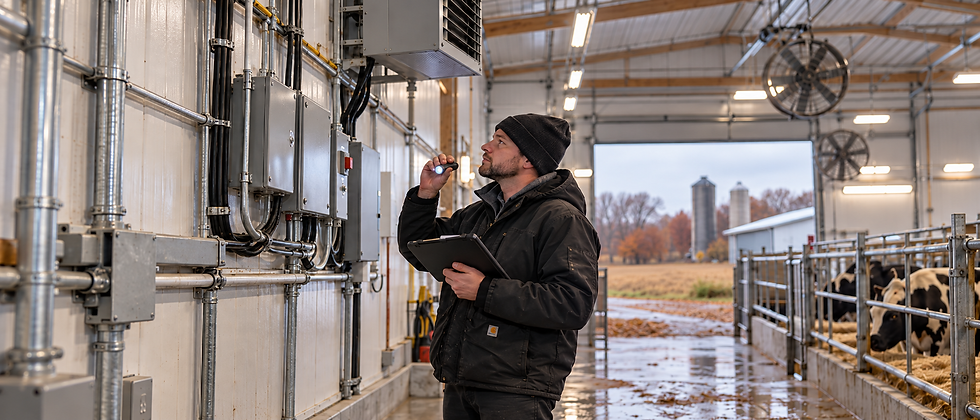
Farm Fire Prevention: The Essential Electrical Checklist

| what to watch for

A fire in an agricultural building can spread fast, and electricity is one of the most common causes. The good news: a few simple, regular checks can dramatically reduce the risk.
Here's a clear checklist to use in a barn, hog barn, poultry house, storage building, electrical room, or workshop.
| 7 Warning Signs to Take Seriously, Right Away
If you notice even one of these, stop and investigate:
Smell of burning plastic or something "hot"
A breaker that trips frequently or for no obvious reason
Breakers, outlets, switches, or extension cords that are warm to the touch
Black marks, yellowing, or deformed plastic on an outlet or junction box
Unusual sounds (crackling, buzzing) near a panel or motor
Flickering lights or power fluctuations
Damaged, pinched, or chewed wiring
| Weekly Checklist (10 minutes)

Do a quick walkthrough of your buildings, focusing on dusty or humid areas.
✅ Electrical Panels
Nothing stored in front, clear access
Doors closed, enclosure intact
No visible moisture, no apparent corrosion
✅ Outlets and Junction Boxes
No loose, cracked, or blackened outlets
Covers in place, especially in wash-down areas
✅ Cables and Extension Cords
No crushed, cut, or worn cables — replace as needed
Avoid using extension cords as permanent wiring
✅ Motors and Ventilation
No excessive dust buildup on motors, fans, or controllers
Unusual noises or vibrations: note it and have it checked
| Monthly Checklist (30 minutes)
✅ Targeted Cleaning
Dust around panels, motors, and controllers (without opening equipment if you are not qualified).
✅ Higher-Risk Equipment
Heating, lighting, motors, conveyors, feeding systems: verify that enclosures and connections appear to be in good condition.
✅ Take Notes When Needed
If the same breakers trip repeatedly, note the date, time, and what equipment was running at the time — this can help identify the cause.
| Seasonal Checklist (Or at Key Moments)
Winter: Space heaters positioned safely, check cables exposed to cold, higher electrical loads.
Summer: Pay closer attention to fans running at full speed, increased humidity, and greater risk of corrosion during this period.
After adding equipment: Verify the new electrical load, make adjustments as needed, and ensure connections are properly made.
After work has been done: Revalidate enclosures, update labeling, check cables and protective systems to confirm everything is compliant.
| When to Call an Electrician

Contact a professional without delay if:
Something is running hot (outlet, panel, enclosure)
A breaker is tripping repeatedly
You notice a burn mark, smell, or crackling sound
You are adding significant equipment (ventilation, robot, motor, heating system)
| From Reaction to Prevention
Maintenance is essential. But to keep small anomalies from becoming big problems, a proactive approach means monitoring your electrical network and acting quickly when abnormal behavior is detected.
Here is a reference sheet to download and keep on hand for what to check on your farm: