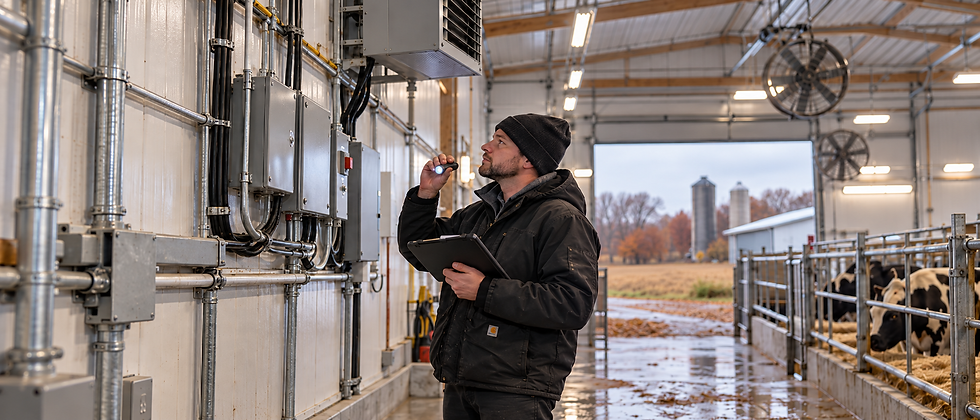
10 Essential Winter Electrical Safety Tips for Farms

| Farm fire prevention this winter

When temperatures drop, electrical systems on farms are pushed to their limits. Moisture increases, heaters run nonstop, equipment works harder, and dust accumulates, creating the perfect conditions for electrical failures, hot points, and barn fires.
According to industry experts, a large portion of electrical incidents on farms can be prevented with the right winterization steps, regular inspections, and proactive monitoring.
Here are 10 essential electrical safety tips to help you prepare your farm for the winter season and dramatically reduce fire risks.
1. Keep an Eye on Heaters
Heaters will work for longer periods. That also means: risks of overheating, dust accumulation, corrosion, and short circuits.
Ensure propane or natural-gas heaters are approved for barn environments
Verify they are professionally installed to code
Inspect milk house heaters weekly (extreme humidity + heat = high-risk zone)
Suspend heat lamps with chains or non-combustible supports
Keep bedding and combustibles far away from heat sources
2. Replace or Eliminate Extension Cords
Extension cords are one of the most common hot points on farms.
Never use them permanently
Choose commercial-grade cords (not household)
Replace frayed or cracked cords immediately
Keep cords away from animals to prevent corrosion
Watch for melted plugs or warm connectors, both signs of impending failure
Winter increases the risk: cords freeze, crack, or sit in moisture.
3. Hardwire Equipment & Install Waterproof Outlets
Moisture is a winter constant. And moisture + electricity create the perfect conditions for arcing and corrosion.
Hardwire fans, lights, and equipment whenever possible
If plugs are required, use NEMA 4X waterproof outlets designed for dusty and humid barns
Check high ceilings and hard-to-reach fixtures (for dust + heat buildup)
This single upgrade can significantly reduce winter electrical risks.
4. Clean Lights, Panels, Motors & Surfaces Regularly
Winter means barns are closed tighter, and dust builds up faster. Dust acts like fuel when equipment overheats.
Blow off lights, rafters, fans, and pipes weekly
Vacuum enclosed electrical spaces
Keep panels and motors clean and accessible
Before welding or grinding, clean the area or keep it wet
5. Use a Thermal (FLIR) Camera to Detect Hidden Hot Spots
Thermal imaging is one of the most effective preventive tools for winter safety.
Scan panels, motors, heaters, exhaust fans, and junction boxes
Identify overloaded circuits or failing connections
Check for hot bearings in conveyors, augers, or feed systems
Monitor problem areas monthly during winter
Thermal cameras are now affordable, and can prevent a barn fire long before it begins.
6. MOVe Combustibles Away From Electrical Sources
Hay, straw, oil, bedding, and dust are especially dangerous in winter as airflow drops and humidity spikes.
Store combustibles in non-livestock buildings
Keep piles clear of heaters, panels, and motors
Check for dust buildup around outlets and junction boxes
7. Inspect Silo Unloaders, Pumps & Bedding Equipment
Other critical winter hot spots include:
Silo unloaders
Well pumps
Bedding choppers
Bale handling equipment
Cold weather stresses motors and increases startup loads.
Check insulation on cables
Listen for unusual noises or slow starting
Ensure motors aren’t overheating under strain
Clean dust and built-up material weekly
Winter is the season with the highest motor failures.
8. Control Moisture to Reduce Corrosion & Ground Faults
Moisture is one of the top three electrical risk factors
Improve ventilation even during cold months
Remove standing water and ice around equipment
Inspect metal junction boxes for rust or swelling
Ensure heaters don’t create condensation pockets
Pro tip: Always check areas near wash stations.
9. Test OUTLETS, Breakers & Emergency Shutoffs Before Peak Winter
January and February see the highest electrical load of the year.
Test GFCI (ground fault circuit interrupter) outlets monthly
Open panels only if qualified or with your electrician present
Verify emergency shutoffs for parlours and equipment rooms
Ensure breakers are appropriately sized and labeled
These checks prevent failures when animals and infrastructure need heat the most.
10. Work With Professionals & Use Real-Time Monitoring
Farmers are increasingly turning to proactive electrical monitoring to detect anomalies before they become emergencies.
Ask your insurer for a risk review
Schedule an annual electrical inspection
Use a 24/7 monitoring system like PrevTech to detect:
Overheating circuits
Ground faults
Abnormal equipment behaviour
Load anomalies
Winter is the season when early detection matters most.
| Conclusion: Prevention Is the Best Winter Protection

Winter puts every electrical system on your farm under pressure. The combination of moisture, dust, cold starts, heaters, and heavier equipment use makes the season the highest-risk period for electrical failures and barn fires.
With the 10 tips above, and with a proactive monitoring solution, you can protect:
your animals
your people
your buildings
your operations
This winter, small problems don’t have to turn into big ones.
Want to prevent electrical issues before they happen?
We at PrevTech help farms detect anomalies in real-time, long before they lead to fires, equipment failures, or costly downtime.
👉 Learn more or speak with our team of experts today. Contact us today for a free quote or to learn more on our farm fire prevention solution.